Scott Adams has passed away at the age of 68. He was one of the first cultural figures to support Donald Trump for president. The left hates him, of course. But more importantly for us, on his deathbed, he said, "I accept Jesus as my Lord and Savior". Is that enough to go to heaven?
Welcome to Politics by Faith. Thanks for being here. Today's episode, I want to talk about Scott Adams. Scott Adams passed away from pancreatic cancer at the age of 68. If you don't know Scott Adams, he was the author of the Dilbert cartoons, but more recently he turned into a political commentator. And I believe his legacy will be something like he was one of the first people in our culture to support Donald Trump for president.
and willing to lose everything because of it. All of his newspapers, all the newspapers canceled his comic strips and all that, all his speaking engagements, because he came out very early in 2015 and supported Donald Trump. But he did it in a very interesting way, where he caused people to look at what was happening in a very different way, where there are a lot of people laughing at him and a lot of people hating him. He analyzed Trump seriously. not even from a Trump's left or right or a conservative liberal or right or wrong, but from a look at Trump, look at him. He's a master of persuasion.
That was his argument from the very beginning. And I think he really helped people understand how Trump talked and how he acted and stand that in a really powerful way. A couple of examples here. Here he is. This is the, this is Scott Adams talking about the linguistic kill shot.
He called it.
People in the world, living people, were masters of persuasion. They've got a linguistic gift for influencing people and they're using actual technique. What I saw in Trump was someone who was highly trained and that a lot of the things that the media were reporting as sort of random insults and bluster and just Trump being Trump, looked to me like a lot of deep technique that I recognized from the fields of hypnosis and persuasion. So let me give you a few examples of the technique that Trump uses. There's something that I call the linguistic kill shot.
And what that is, is a engineered set of words that essentially changes an argument or ends it so decisively, I call it a kill shot. So one of the ones that Donald Trump used was when he referred to Jeb Bush being a low -energy guy.
Very, very low energy. So low energy that every time you watch him, you fall asleep.
More energy tonight, I like that. Or when he referred to Carly Fiorina as a robot.
Like a robot, bop, bop, bop, like a robot.
Or Carson as nice.
Ben is a nice man.
He's actually a really nice guy.
All of these have the same quality. They're words you haven't heard in the political realm before. So they're sort of virginal words that he can use the way he wants. They don't have a lot of baggage with them. But they also perfectly fit what you are already thinking about these people. They weren't random insults.
And once you hear it, you can never get it out of your mind. That's how powerful it is.
He encouraged people to understand Donald Trump. And I think the effect of that, one of them was to give people permission to support Donald Trump. People who maybe felt they weren't allowed to at first. He was a major, let's put it like this, he was a major crack in the dam for a lot of people in supporting Donald Trump. And then after that, after he lost everything, and this is him, he said, when I decided I would throw away my entire social life to back Trump, and when I eventually threw away my entire career, which even before I was canceled, my licensing business and book sales went to almost nothing, because I was supporting Trump. I sacrificed everything.
I sacrificed my social life. I sacrificed my career. I sacrificed my reputation, I may have sacrificed my health, and I did that because I believed it was worth it. He was a major crack in the dam for a lot of people supporting Trump, and then he leaned into it and continued to provide insightful commentary that I truly believe if you made a list of the most influential people in the Trump phenomenon in America, that Scott Adams would be near the top of that list. How much he's still hated today? People Magazine wrote the headline, Scott Adams disgraced Dilbert creator dies at 68.
I want to talk about this. This is the podcast politics by faith. So we'll make a biblical turn here. He announced relatively recently that he had pancreatic cancer. And as this cancer does, his body failed very quickly. Every day in his video podcast, you could see him wasting away.
If you've ever known anyone with pancreatic cancer, you know how fast it happens. He was very obviously dying. We all are. I don't think I shared here yet the letter written by Ben Sass. Ben Sass, the former senator from Nebraska. He wrote this two days before Christmas.
He said, friends, this is a tough note to write, but since a bunch of you have started to suspect something, I'll cut to the chase. Last week I was diagnosed with metastasized stage four pancreatic cancer and I'm going to die. Advanced pancreatic is nasty stuff. It's a death sentence. But I already had a death sentence before last week. We all do.
We'll spend another day talking about Ben Sasse, because he goes on and he wrote a beautiful article, a beautiful letter. But that's the point of it, is we're all going to die. And Ben Sasse is going to die.
very well.
I've been reading Ecclesiastes lately. If you watch my podcast, watch this show, you can see behind me is an old copy of a page from Ecclesiastes from the 1600s, pretty cool. We're gonna do a lot more of it moving forward here on the podcast, because I'm reading this book called Living Life Backward, and it's based on fully recognizing that we are going to die, and knowing that we should live our life differently. One of the consequences of throwing God out of our culture is that we try Our culture tries to ignore everything that comes with Christianity. And part of that is an afterlife. And part of the afterlife is dying well.
And part of this is, part of life is living with the inevitability of death in mind every single day. The more we live, the more we realize that life is vanity, as it says in Ecclesiastes. Life is a breath. It's fleeting. And that should reorient us towards God as the only lasting foundation, because nothing else in life does last. Now, this doesn't mean life is meaningless.
It doesn't mean life is worthless. But we need to stop thinking of life as something that can be won and instead think of life as a gift. And when you think about it that way, this causes us to live life wisely and freely and generously. A good resolution perhaps is to this year, not think of anything in life to be won, but think of life as a gift to be enjoyed. Now, what I really want to talk about in today's show, we'll do more with Ben Sasse's letter and Ecclesiastes another day. But Scott Adams wrote this goodbye letter, short, but it's about all the things he accomplished in his life.
It's on his Twitter page, Scott Adams says. You can read the whole thing and you can determine if you think his life accomplishments as he wrote them are impressive or noble or honorable. I'm curious what you think. But imagine or don't just imagine, you should. Write a letter as if you're at the end of your life and write the letter listing the things that you want to be known for, the things that you realize are most important. Then live life accordingly.
Make the letter come true. Does that make sense? This is way more than setting a goal. Write the goodbye letter from your deathbed. Here were my proudest accomplishments. And then as you live your life, the decision, are the decisions you're making, the choices you're making, are they going to lead to that letter becoming true?
For example, if your deathbed letter says, I was always there for my friends. Great. This point forward, make sure you're doing that. And every choice you make, make sure it leads to that final thing, the final letter of yours. being true. And if we do that, it's going to cause us to make some really big choices in life as we focus on the things that are actually really important.
Ecclesiastes does this for us. It causes us to live life backwards with death in mind because you will indeed die. Now in this letter of his, here's the, that was my lesser point. Here's my main point. In the beginning of the letter, he says this, many of my Christian friends have asked me to find Jesus before I go. I'm not a believer, but I have to admit the risk reward calculation for doing so looks attractive.
So here I go, I accept Jesus Christ as my Lord and Savior, and I look forward to spending an eternity with him. The part about me not being a believer should be quickly resolved if I wake up in heaven. I won't need any more convincing than that. And I hope I'm still qualified for entry. That's it.
That's all about that. I shouldn't start off with such a cynical note. The part about him being a believer or not will also be quickly resolved if he wakes up in hell, not just in heaven. Is that enough? Does that get you into heaven? Waiting for the final day of your life to say, I accept Jesus Christ as my Lord and Savior.
as a pretty, like pretty explicitly there said it's a hedge against any alternative. Is that all you need to do? I mean, he talks about a risk reward calculation. I might as well give it a try. Like it's a magic genie potion or like say the magic words kind of thing. I don't know if it's enough.
God knows, but I can share some scripture. I think of Romans 10 verse nine. If you confess with your mouth that Jesus is Lord and believe in all your heart that God raised him from the dead, you will be saved. Next sentence. For with the heart one believes and is justified, and with the mouth one confesses and is saved. It's not just the mouth.
It's not just the words. If your heart believes or it is your heart that believes, it is your heart that believes. and then your mouth then confesses. Some people will live their life their way and wait till the very end. First, this assumes that you know when the end is. Don't wait.
It could happen in an instant. And also, if you're waiting to the end to hedge your bet that heaven is real, again, you're also hedging your bet that hell isn't, but just make your bet now. Hedge it now! And see what God can do in your life until you die.
Why wait?
Why are you waiting? Because you think you can outsmart God? You think you beat the system? You think you're so smart you found a loophole? You're not, Lord. You did not find a loophole.
I would also argue in 1 Corinthians 12 .3, therefore, I want you to understand that no one speaking in the spirit of God ever says Jesus is accursed, and no one can say Jesus is Lord except in the Holy Spirit. You can say the words, Jesus is Lord. I mean, you can say the words, but you can't truly mean it without the Holy Spirit. It is the inner work of the Holy Spirit that causes one to say Jesus is Lord. You can't fake it at the end. I'd be like, well, we'll see if it works.
And you only get one chance. This is your only chance, this one life. Like the rich man in hell in Luke 16 was pleading to come back to earth. Please, please go tell my family. No one's going to come back and say, Hey guys, here's the real story. Here's what you really have to do.
You have to do X, Y, and Z. The Bible's for real about this, this so much, a little bit of wiggle room over here. No, that's not how that works. We already know everything we need to know and the Bible says even if someone did come back from the dead, that wouldn't even convince us. We know what we need to know. Don't wait. Martin Lloyd -Jones said the sign of a true saving faith is a changed heart that hates sin and turns from it, that's repentance, and a life increasingly marked by obedience to Christ's commands and love for God and neighbor.
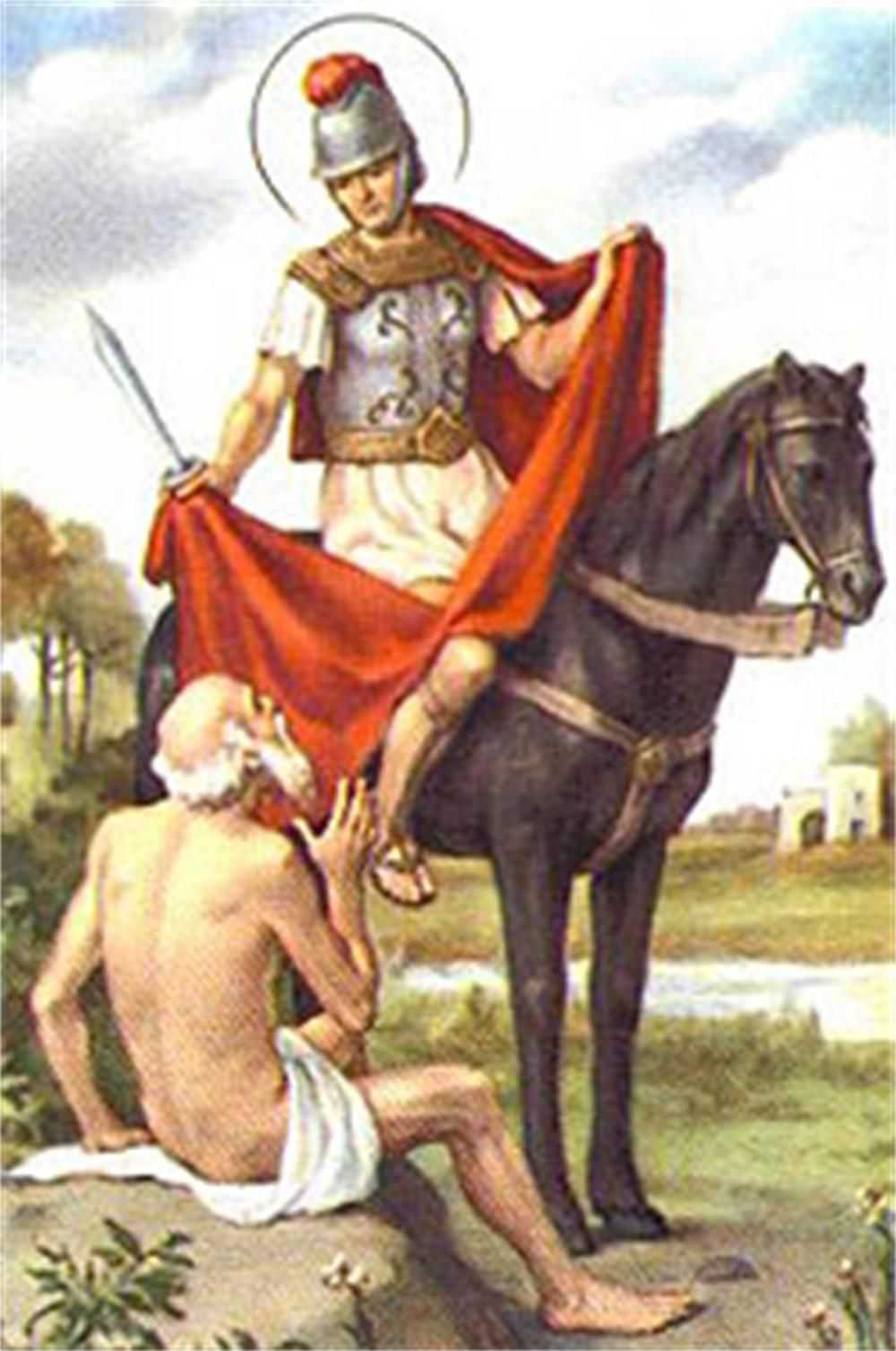
You can't show that on your deathbed. Now, a deathbed confession, I believe, could happen, but why wait? Why wait? Jesus himself said, not everyone who says to me, Lord, Lord, will enter the kingdom of heaven, but the one who does the will of my father who is in heaven. One last scripture that comes out, comes to mind when it comes to end of life is Matthew 20. This is the parable of the wages.
It says here, sorry, this is the parable of the workers in the vineyard. For the kingdom of heaven is like a landowner who went out early in the morning to hire workers for his vineyard. He agreed to pay them a denarius for the day and sent them into the vineyard. About nine in the morning, he went out and saw others standing in the marketplace doing nothing. He told them, you go work on my vineyard. I'll pay you whatever's right.
So they went, he went out about noon and about three in the afternoon, did the same thing. About five in the afternoon, he went out and found others still standing around. He said, why have you been standing here all day doing nothing? Because no one hired us. They answered. He said to them, You also go and work in my vineyard.
Then the evening came, and the owner of the vineyard said to his foreman, Call the workers and pay them their wages, beginning with the last ones hired, and going on to the first. The workers who were hired about five in the afternoon came and received a denarius. So when those came who were hired first, they expected to receive more, but each one of them also received a denarius. You can understand their outrage. When they received it, they began to grumble against the landowner. Those who were hired last worked only one hour, they said.
And you've made them equal to us, who have borne the burden of the work in the heat of the day? But he answered one of them, I am not being unfair to you, friend. Didn't you agree to work for a denarius? Take your pay and go. I want to give the one who was hired last the same as I gave you. Don't I have the right to do what I want with my own money?
Or are you envious because I am generous? So the last will be first, and the first will be last. So many amazing points in this. Uh, and the main point is that God's grace amazing, but a secondary point, uh, I think you read into this a little is, is when you're saved, right? And maybe someone who was saved when they were younger, praise God, looks at someone who was saved at the deathbed and they're like, well, wait a second. I had to live this whole life and they're grumbling.
Don't grumble. In fact, we should praise God that God can save anyone at any time. I'll end with Charles Spurgeon. He said, my last word to God's children is this. What does it matter after all, whether we're first or whether we're last. Do not do not let us dwell too much upon it for we all share the honor given to each.
When we are converted, we become members of Christ's living body. And as we grow in grace and get the true spirit that permeates that body, we shall say when any member of it is honored, this is honor for us. If any brother shall be greatly honored of God, I feel honored in his honor. If God shall bless you, brother, and make him 10 times more useful than you are, then you said that he is blessing you. Not only blessing him, but you, if my hand is something in it, my foot does not say, oh, I've not got it. No.
For if my hand has it, my foot has it. It belongs to the whole of the body. If someone becomes a believer, no matter what point in their life, praise God, we all benefit. But don't wait to the very end of life. Confess that Jesus is Lord now and jump for joy at God's grace and at the salvation of every sinner that you see saved along the way.